


Life Skills at Pivot
The Skills Nobody Taught You, In An Environment You Can Practice Them
Leaving treatment as a young adult comes with a strange realization. The world is opening back up, and a lot of everyday adult life never got learned. While friends were figuring out paychecks, groceries, and job interviews, many young men in recovery were dealing with something else entirely.
That’s the gap Pivot was built for. Residents learn the practical skills of adult life by doing them every day, with staff and peers close by when something doesn’t go right the first time.
What Life Skills Do Young Men Learn At Pivot?
Residents learn the everyday skills independent living requires: keeping a routine, managing money, cooking and keeping house, communicating honestly, handling hard emotions, and finding direction in work or school.
These aren’t taught as a class. They’re built into daily life at Pivot, so residents practice them in real conditions while support is still close.
Why Do Life Skills Matter So Much In Early Recovery?
Because most relapses don’t start with a crisis. They start with a life that feels unmanageable: bills piling up, days with no shape, a conflict nobody knew how to handle. A young man who can run his own day has fewer of those moments and more confidence when they come.
Life skills are one of Pivot’s four recovery pillars, alongside 12-step recovery, clinical support, and hobbies and passions.
The Skills Residents Practice Every Day
Building A Routine That Works
A routine gives a busy mind one less thing to manage. Residents follow a general rhythm for mornings, meals, and evenings. It’s not a rigid schedule, just enough structure to keep the day from slipping away.
Taking Care Of A Home
Residents clean their rooms, do their laundry, help with groceries and meals, and keep shared spaces in shape. It sounds small, but most guys are surprised by the pride that comes from it.
When their space is in order, they start trusting themselves to keep up with the rest of life.
Cooking For Yourself
Residents shop, plan meals, and cook, including in shared kitchens with housemates. It’s one of the first skills they practice in Phase I, and one of the most useful when they move out on their own.
Managing Money
Most guys don’t arrive in recovery with strong money habits.
Residents learn to budget, track spending, plan for groceries and gas, understand a paycheck, and tell the difference between a need and a want. The goal isn’t financial expertise. It’s a system that works, which makes life feel far more stable.
Communicating Like An Adult
Many young men arrive unsure how to say what they mean without shutting down or getting angry. Check-ins with staff, conversations with peers, and small conflicts in the house all become practice. Residents learn to speak plainly, listen without assuming the worst, and work through disagreements. Those skills carry into work, school, and relationships.
Handling Emotions Without Spiraling
Some days in early recovery feel easy. Others feel heavy for no clear reason.
Residents learn practical ways to slow down before things get messy: journaling, a walk, breathing exercises, or talking to someone instead of isolating. Pivot’s licensed therapists support this work through individual and group therapy.
Finding Direction In Work Or School
Recovery feels better with something to move toward. Staff help residents with resumes, applications, interview prep, and planning transportation.
Some residents start a job right away; others finish high school, take college classes, or explore a trade.
How Do Life Skills Build Through Pivot’s Phases?
Residents take on more responsibility as they show they’re ready. Each phase adds skills on top of the last.
| Typical length | Life skills focus | |
|---|---|---|
| Settle | 30 days | Daily routine, house responsibilities, and training in budgeting, cooking, and time management |
| Move |
60 days |
More independence with budgeting, transportation, and daily schedule, plus school, work, or an internship |
| Rise |
60 days |
New freedoms like later curfews, driving, and dating, plus mentoring newer residents |
| Pivot |
45 days |
Living as independently as possible, with staff feedback before graduation |
Progress is based on behavior and readiness, not the calendar. Learn how the phases work.
Why learn life skills in a community?
Residents learn alongside guys working through the same things. They cook together, solve problems together, and sometimes get on each other’s nerves. That’s real life, and it’s good practice. The community brings accountability on hard days and makes the good days more fun. Many of those friendships last long after graduation.
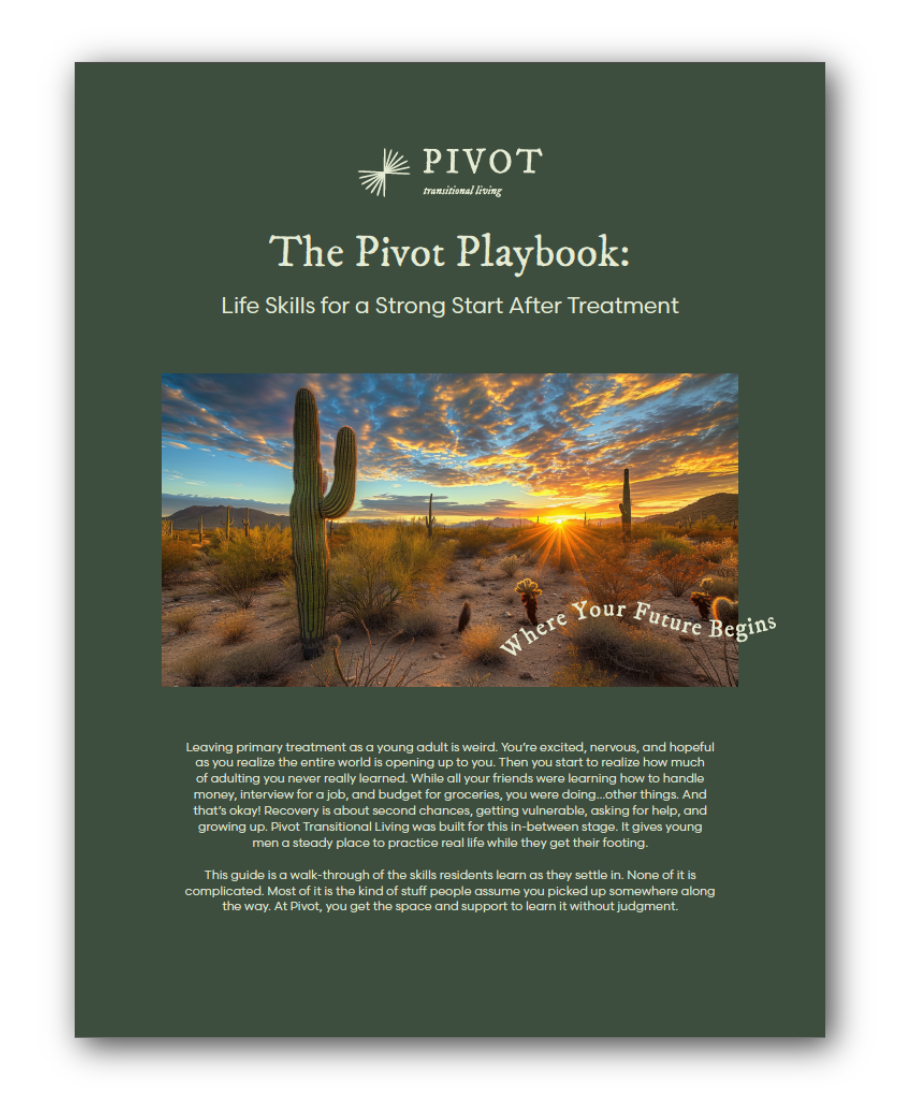
Free Guide: The Pivot Playbook
Want the full walkthrough? Our free guide breaks down each skill young men learn at Pivot, with clear steps and honest advice for the first months after treatment.

FAQ
What if my son has never managed money or cooked a meal?
That’s common, and it’s exactly what Pivot is for. Residents start in Phase I with training in budgeting, cooking, and time management, then take on more as they’re ready.
Are life skills taught in a classroom?
Mostly no. Residents learn by doing: running their own routines, cooking in shared kitchens, managing their own money, and working through real conflicts in the house, with staff guidance along the way.
Does Pivot help residents find jobs?
Yes. Staff help with resumes, applications, interview prep, and transportation planning. Residents work toward employment, school, or an internship as part of the program.
How long does it take to build these skills?
Most residents stay six to eight months. By the final phase, they’re living with near-total independence while still getting feedback from staff.
Ready to talk about what comes next?
If your son is finishing treatment and isn’t ready to manage life on his own yet, we can talk through where he is and whether Pivot fits.
